Is Following Someone on Instagram Cheating? The Debate Explained
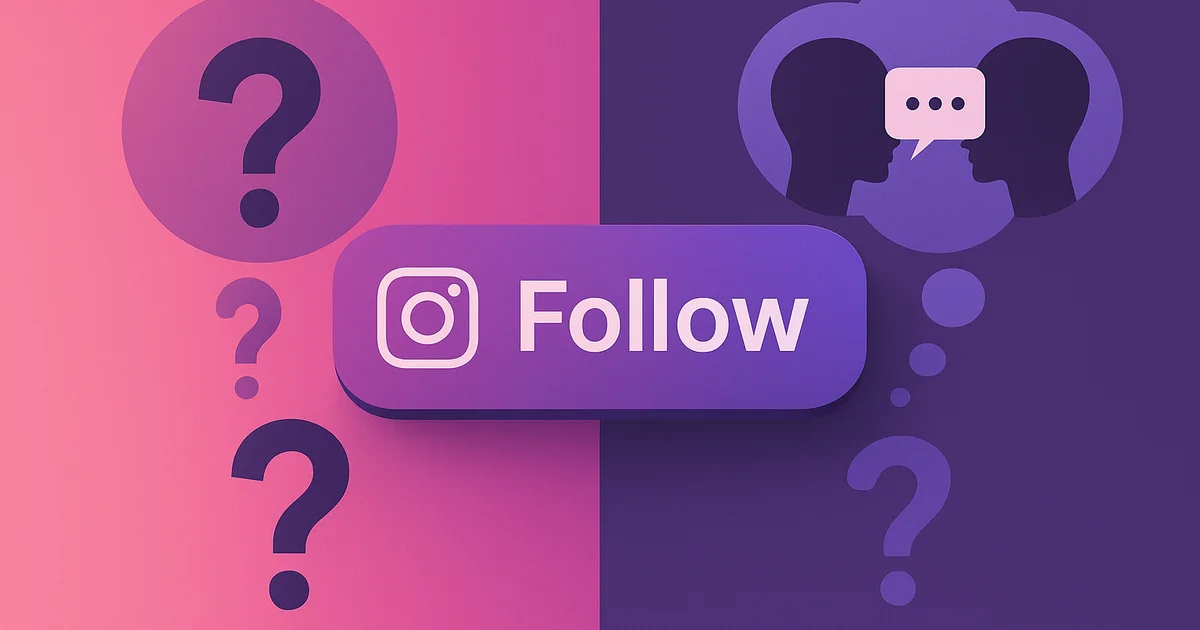
It is one of the most debated relationship questions of the social media age: is following someone on Instagram a form of cheating? The answer depends on who you ask, what "following" means in context, and what boundaries exist in the relationship. Let us break it down.
Why This Question Is So Common
A few factors make this a universal relationship tension:
Instagram is visual. Unlike Twitter or LinkedIn, Instagram centers on photos and videos. Following someone means their visual content appears in your feed daily. This makes follows feel more personal and intimate than on other platforms.
Following is a public action. Unlike DMs (private), follows are visible to anyone who checks the follower list. This creates a dynamic where one partner can see exactly who the other person chose to follow.
Social media blurs boundaries. The line between "looking" and "engaging" is fuzzy. Is scrolling past a photo the same as checking out someone in person? Is liking a photo a form of flirting? Is following someone you find attractive a statement of interest?
Tools make it visible. With services like Lurk that track follow activity with timestamps, it is now possible to see exactly when a partner followed someone and whether they tried to hide it by unfollowing later.
The "It's Not Cheating" Perspective
Many people argue that following someone on Instagram is completely harmless:
It is just content consumption. Following a fitness model is no different from watching an attractive actor in a movie. You are consuming publicly shared content.
There is no interaction. A follow does not imply a conversation, a connection, or any reciprocal interest. The person you follow probably does not even know you exist.
Policing follows is controlling. Telling a partner who they can and cannot follow on social media is a form of control that reflects insecurity, not healthy relationship dynamics.
Everyone does it. The average Instagram user follows hundreds of accounts. Some will inevitably be attractive people. Expecting otherwise is unrealistic.
Appreciation is not infidelity. Finding other people attractive does not stop when you enter a relationship. Acknowledging attractiveness through a follow is honest and human.
Try Lurk free
See who anyone just followed, instantly, anonymously.
The "It Is Cheating (or Close to It)" Perspective
Others argue that following certain accounts crosses a line:
Intent matters. Following someone because you find them sexually attractive IS expressing interest, even without direct interaction. The follow serves your desire, not informational needs.
It is disrespectful. Publicly following accounts that primarily post provocative content signals to both your partner and the world what you are seeking. Your partner has a right to feel disrespected.
It creates comparison. When your partner follows fitness models or influencers, it can create unhealthy comparisons. Even if unintentional, the message received is "this is what I find attractive, and you are not that."
It is a gateway. Many emotional and physical affairs start with innocent social media interactions — a follow, then a like, then a DM, then a conversation. The follow is the first step.
Actions reveal priorities. The accounts you actively choose to follow reflect your interests and priorities. If a significant portion of your follows are attractive strangers, it says something about how you spend your attention.
Where Most Couples Land
Research and relationship experts generally agree on a middle ground:
Not cheating (usually):
- Following celebrities and content creators you enjoy
- Following friends and acquaintances of any gender
- Having a diverse following list that reflects genuine interests
- Following accounts for professional or educational reasons
Gray area:
- Following personal accounts of attractive strangers (not public figures or creators)
- Following accounts that primarily post provocative content
- Following someone you met in person and find attractive
- Following an ex and engaging with their content
Crosses a line (for most couples):
- Following and then DM-ing attractive strangers
- Following and hiding it (the concealment itself is the issue)
- Following accounts that explicitly sexualize content and engaging with that content
- Following someone your partner has specifically expressed discomfort about
How Instagram Follow Tracking Changes the Equation
Before tracking tools existed, this debate was largely theoretical. You might have a vague sense that your partner follows "those kinds of accounts," but quantifying it was impossible.
Now, with tools like Lurk, a partner can:
- See exactly who was followed and when
- Detect follow/unfollow patterns (suggesting awareness that a follow might be problematic)
- Track the timing of new follows (late night, during arguments, etc.)
- Build a comprehensive picture of following behavior over time
This changes the conversation because it introduces data. Instead of "I feel like you follow too many models," it becomes "You followed seven personal fitness accounts between 11 PM and 1 AM last Tuesday."
For a step-by-step guide to tracking follows, read our follow tracking guide.
Setting Healthy Boundaries
Rather than debating whether following is "cheating," productive couples establish clear boundaries:
Have the conversation proactively
Do not wait until there is a problem. Early in a relationship, discuss:
- How do we both feel about following attractive people?
- Are there types of accounts that make us uncomfortable?
- What constitutes appropriate social media interaction with others?
- How do we handle it if a boundary feels crossed?
Focus on feelings, not rules
"I feel uncomfortable when you follow accounts like that" is more productive than "You are not allowed to follow them."
Acknowledge the double standard
If you follow attractive accounts but expect your partner not to, address that honestly.
Revisit as the relationship evolves
What felt fine while dating casually might feel different in a committed relationship or marriage. Check in regularly.
The Concealment Factor
Interestingly, the act of hiding follow behavior often causes more damage than the follow itself. If someone:
- Follows an account and then unfollows before their partner might see it
- Uses a secondary account for follows they do not want associated with their main profile
- Gets defensive when asked about their following list
The concealment signals that they know the behavior would upset their partner and chose to hide it rather than discuss it. This is a trust issue regardless of whether the follow itself constitutes "cheating."
Different Relationships, Different Rules
There is no universal answer because every relationship has different agreements:
- Some couples have completely open social media with no restrictions
- Some agree that following strangers for their appearance is disrespectful
- Some use joint Instagram accounts to eliminate the concern entirely
- Some do not care at all about social media behavior
The only wrong answer is having no conversation about it and then being surprised when it becomes a source of conflict.
The Trend Connection
The viral Men Exposed 2026 trend has brought this debate into public view. People are sharing their tracking data to show patterns of deceptive following behavior, and the response has been polarized — some calling it accountability, others calling it controlling surveillance.
Start the Conversation
If this article resonated and you want objective data about someone's following activity, Lurk provides anonymous, timestamped tracking for any public Instagram account. Use it for clarity, not control. For more on navigating Instagram in relationships, see our Instagram cheating signs guide and our FAQ.
Ready to try Lurk?
See who anyone just followed on Instagram, 100% anonymous, no login required.
Instagram never tells them their following list was viewed.

Keep reading
Is My Boyfriend Following Someone New on Instagram? How to Find Out
Wondering if your boyfriend is following new people on Instagram? Here's how to find out — instantly, anonymously, without confrontation.
How to See Someone's Following List on Instagram (Full Guide 2026)
Instagram orders someone's Following list for you, not by date. Here's how to see it anyway and catch their new follows, newest first.
How to See Who Someone Followed on Instagram (2026)
Step-by-step guide to see exactly who anyone just followed on Instagram — anonymously, without them knowing. Free tool included.
Compare the best Instagram tools (2026)
Independent, regularly-updated rankings, plus the original follow-behavior dataset.
- Best Apps to See Who Someone Recently Followed on Instagram (2026)
- Best Anonymous Instagram Story Viewers (2026)
- Best Instagram Follow Trackers (2026)
- How to See Who Someone Unfollowed on Instagram (2026)
- Best The Ick Alternatives in 2026 (Free & Cheaper Options)
- Best Free Instagram Story Viewers (Anonymous, No Login), 2026
- Best Snoopreport Alternatives in 2026 (Cheaper & Cross-Platform)
- Best DolphinRadar Alternatives in 2026 (With Mobile Apps)
- Best Katch Alternatives in 2026 (Cheaper, With an iPhone App)
- Best Instagram Activity Trackers (2026)
- The Best Way to See Who Someone Unfollowed on Instagram (2026)
- Best Free Instagram Follower Trackers (2026, Honest Guide)
- Best Apps to Track a Specific Instagram Account (2026)
- Best Anonymous Instagram Follower Trackers (2026)
- The Lurk Instagram Follow Index (original data)
- All Instagram tool roundups →
See who any account recently followed
Track any Instagram account and see exactly who they recently followed, anonymously and with no login.
- @bradmacc__@bradmacc__
- @sam_bamm41@sam_bamm41
- @imnotwynn@imnotwynn
- @_flxwerzz.__@_flxwerzz.__
- @moneymirri@moneymirri
- @differentmiguel@differentmiguel
- @therealmaiyaiyona@therealmaiyaiyona
- @katiehemberger@katiehemberger
- @annabelladosaanjos@annabelladosaanjos
- @prabhgill.8@prabhgill.8
- @ghadajaber982@ghadajaber982
- Dwayne Johnson@therock
Keep exploring
More free Instagram tools, live data, and answers from Lurk.
- HubInstagram questions & answersStraight answers to the questions people ask most about Instagram.
- HubInstagram terms glossaryPlain definitions for Instagram tracking and privacy terms.
- HubFree Instagram toolsEvery free Lurk tool in one place: viewers, trackers, and checks.
- Live dataThe Instagram Follow IndexLive aggregate data on how people follow and unfollow on Instagram.
- CompareCompare follow trackersLurk vs The Ick, Snoopreport, and Katch, side by side.
- Free toolAnonymous Instagram profile viewerSee any public Instagram profile without them ever knowing it was you.