Is He Hiding Someone? The Instagram Audit Checklist.
Quick Answer
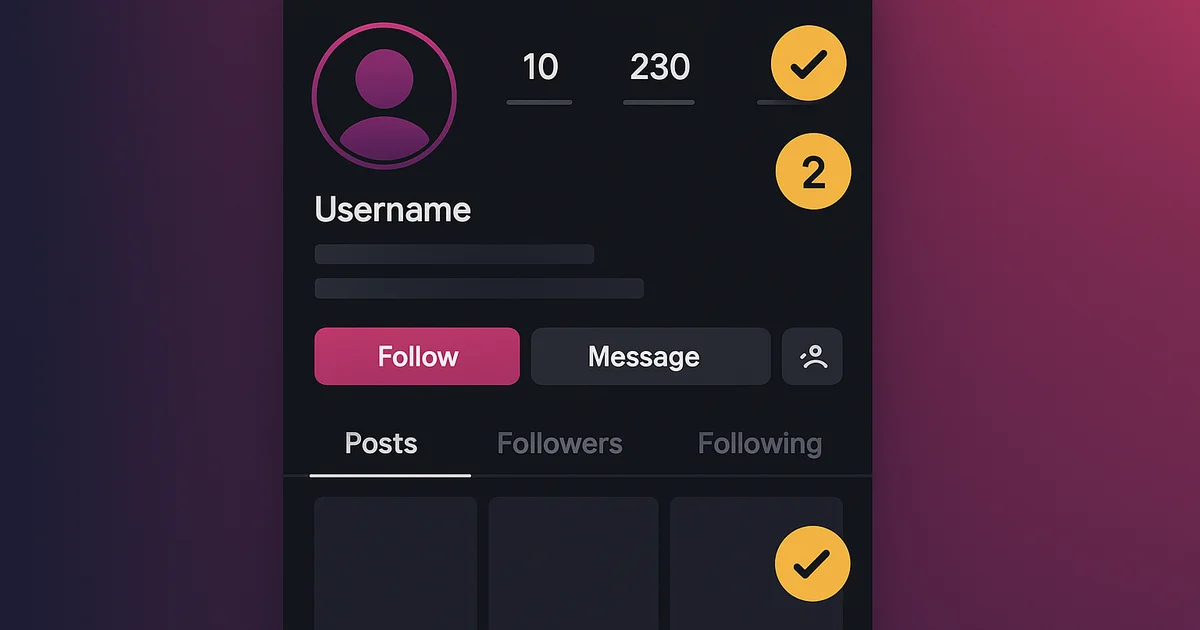
A 12-step Instagram audit takes about 10 minutes and works entirely on his public profile — no login, no app, no notification to him. Most of what's findable is findable this way; the one thing the audit can't catch is real-time changes (follows that happen after your audit but before you check again), which is where a notification-based tracker fills the gap. Below: the 12 steps in the order that matters, what each finding means, and the one thing manual auditing can't cover.
The 12-step Instagram audit
In rough order of signal-to-effort. Do steps 1-6 once a month, 7-10 when something specific feels off, 11-12 when you need the deeper view.
Step 1 — Following count change. Note his current count. Check next week. A growth of 5-10 / week is normal for active users. 50+ / week with no explanation is something.
Step 2 — Top of Following list. Open his Following. The top few entries skew toward "most relevant to you" (Instagram's sort, not strict chronological) but recent additions usually show up in the visible 20. Look for unfamiliar accounts.
Step 3 — Private accounts in the list. Filter visually for the lock icon. Each private account he follows is someone who actively approved his follow request — a higher-intent signal than public follows.
Step 4 — Mutual followers on suspicious accounts. Tap into the unfamiliar accounts. "Followed by X others you know" tells you whether this is part of his existing graph or a one-off. One-offs matter more.
Step 5 — His Followers list for recent additions. Less common, but reciprocal follows from new accounts mean someone followed him recently and he followed back — usually within days.
Step 6 — Story-view list (if he has a story up). Open his story, swipe up. The list is sorted by Instagram's relevance algorithm (which it doesn't explain). Repeated specific names at the top mean those accounts are watching him a lot.
Step 7 — Tagged photos. His "Tagged" tab. People tag him in their photos and the photos appear here unless he hides them manually. New tagged photos from accounts you don't recognise are a clue.
Step 8 — Comment patterns. Look at his last 20 posts. Who's commenting consistently? Comment patterns surface relationships before follows do because comments take more effort.
Step 9 — Likes on his posts. Similar pattern — who likes everything? Likes by specific recurring accounts on every post is the digital equivalent of "she's always around."
Step 10 — Reels he's saved (if his saves are public). Most people don't lock their saves. If his saves are visible, the saved content's content type is its own signal.
Step 11 — Joint-followed accounts. Take a name you're suspicious about. Check how many of his people follow her. Zero mutuals + a private account is a louder signal than 20 mutuals + a public account.
Step 12 — Comment activity from his account. If you can find his account on a third-party tool, his outbound comment activity is sometimes visible. This step usually requires going beyond what the Instagram app exposes — which is where no-login tracking tools start to matter.
Try Lurk free
See who anyone just followed, instantly, anonymously.
What each finding actually means
A high Following-count growth rate: could be algorithmic (Suggested-for-you flood), could be intentional. The diagnostic is whether the new accounts cluster aesthetically and whether they include private accounts with no mutuals.
A new private-account follow with zero mutuals: the single highest-signal finding in the audit. Almost always means he sought the account out specifically.
Repeated names in his story viewers: parasocial in one direction (she's invested in him). Doesn't tell you what he thinks. Tells you who's interested in him.
Comment patterns from one specific account: active interest from her side. The reciprocal — does HE comment back on HER posts — is the deeper signal. The first is one-sided; the combined pattern is mutual.
Saved posts with a specific aesthetic: desire pattern, not necessarily action. Worth noting but not conclusive.
The order matters: where to start so you don't waste time
Most people start with step 8 (comment patterns) because it feels intuitive and end up with a lot of low-signal observations. The order above is calibrated for signal-per-minute:
- Steps 1, 2, 3 (Following count + list inspection): Highest signal-to-effort. 90 seconds total. Catches the clearest patterns.
- Steps 4, 5, 6 (cross-references): Adds context to whatever step 1-3 surfaced.
- Steps 7-10: Lower signal-per-minute, but worth doing if the earlier steps surfaced something specific.
- Steps 11-12: Deep dive, only worth doing when there's a specific suspicion to validate.
If steps 1-3 come up completely clean, you can usually skip the rest. If they surface something, the rest fills in detail.
When the audit isn't conclusive — and what to do then
Three failure modes:
Failure 1: Everything looks normal but your gut won't quiet down. Either your gut has information the audit doesn't (worth listening to), or the anxiety has built up from non-Instagram sources and Instagram is the easiest thing to inspect. Both are possible. The 30-day re-audit is the next step.
Failure 2: You found one weird thing but can't tell if it's a pattern. The single observation needs more time-series data. Either re-audit weekly for a month or use real-time monitoring to fill the gap between manual checks.
Failure 3: You're sure something's there but the audit's surface is too shallow to catch it. This is the 24-48 hour follow-loop case — he follows, interacts, unfollows in a window faster than your weekly audit can see. Manual auditing can't catch this; only continuous monitoring can.
The one step the audit can't cover
Every step above is a snapshot. Snapshots miss the loops — the follows added and removed inside the gap between your audits. The modern cheating signs breakdown names follow-and-unfollow loops as the single fastest-growing concealment pattern since 2019, and the manual audit is structurally unable to catch them.
The mechanical fix is to replace point-in-time auditing with continuous monitoring. A tool that watches his public follow list in the background and pings you the moment something changes turns the audit from a monthly chore into a one-time setup.
Lurk does that for $1 first week — no login, no notification to him, push to your phone when his follow list changes. The 12-step audit above stays useful for the deeper one-time inspection. Continuous monitoring fills the gap between audits.
If the audit found nothing and your gut is settled, congratulations — close the tab. If the audit found something or your gut is still loud, the next step is the longer-term monitoring approach.
Ready to try Lurk?
See who anyone just followed on Instagram, 100% anonymous, no login required.
Instagram never tells them their following list was viewed.

Keep reading
Signs He's Hiding Someone on Instagram (Beyond the Obvious)
Past the "phone face-down" cliches — the 11 behaviors that actually predict concealed contact, ranked by reliability.
How to See Who Someone Followed on Instagram (2026)
Step-by-step guide to see exactly who anyone just followed on Instagram — anonymously, without them knowing. Free tool included.
Can You See Who Someone Followed on Instagram? Yes — Here's How
Instagram hides follow activity but there's a way. Learn how to see who someone recently followed on Instagram in real-time, 100% anonymously.
Compare the best Instagram tools (2026)
Independent, regularly-updated rankings, plus the original follow-behavior dataset.
- Best Apps to See Who Someone Recently Followed on Instagram (2026)
- Best Anonymous Instagram Story Viewers (2026)
- Best Instagram Follow Trackers (2026)
- How to See Who Someone Unfollowed on Instagram (2026)
- Best The Ick Alternatives in 2026 (Free & Cheaper Options)
- Best Free Instagram Story Viewers (Anonymous, No Login), 2026
- Best Snoopreport Alternatives in 2026 (Cheaper & Cross-Platform)
- Best DolphinRadar Alternatives in 2026 (With Mobile Apps)
- Best Katch Alternatives in 2026 (Cheaper, With an iPhone App)
- Best Instagram Activity Trackers (2026)
- The Best Way to See Who Someone Unfollowed on Instagram (2026)
- Best Free Instagram Follower Trackers (2026, Honest Guide)
- Best Apps to Track a Specific Instagram Account (2026)
- Best Anonymous Instagram Follower Trackers (2026)
- The Lurk Instagram Follow Index (original data)
- All Instagram tool roundups →
See who any account recently followed
Track any Instagram account and see exactly who they recently followed, anonymously and with no login.
Keep exploring
More free Instagram tools, live data, and answers from Lurk.
- HubInstagram questions & answersStraight answers to the questions people ask most about Instagram.
- HubInstagram terms glossaryPlain definitions for Instagram tracking and privacy terms.
- HubFree Instagram toolsEvery free Lurk tool in one place: viewers, trackers, and checks.
- Live dataThe Instagram Follow IndexLive aggregate data on how people follow and unfollow on Instagram.
- CompareCompare follow trackersLurk vs The Ick, Snoopreport, and Katch, side by side.
- Free toolAnonymous Instagram profile viewerSee any public Instagram profile without them ever knowing it was you.